
English
SQL: tables and queries
Creating tables: DDL
SQL commands are divided into groups: DDL (Data Definition Language) creates and changes the structure (CREATE, ALTER, DROP), DML (Data Manipulation Language) changes data (INSERT, UPDATE, DELETE), SELECT queries read data, and transaction control commands (BEGIN, COMMIT, ROLLBACK) combine other commands into a single unit. SQL keywords are not case-sensitive, but it is customary to write them in uppercase. Table and column names are written in lowercase with underscores (pub_year): PostgreSQL converts names with uppercase letters to lowercase unless they are enclosed in double quotes. String values are enclosed in single quotes: 'Clean Code'.
The "Library" example
The script creates the database tables from Fig. 7.2 (the library.sql file, run in psql with the \i command or in the DataGrip console). The DROP TABLE IF EXISTS command at the beginning lets you run the script repeatedly.
sql
DROP TABLE IF EXISTS loans, book_authors, readers, books, authors;

CREATE TABLE authors (
    id   integer GENERATED ALWAYS AS IDENTITY PRIMARY KEY,
    name varchar(100) NOT NULL
);

CREATE TABLE books (
    id       integer GENERATED ALWAYS AS IDENTITY PRIMARY KEY,
    title    varchar(200) NOT NULL,
    pub_year integer CHECK (pub_year BETWEEN 1450 AND 2100),
    isbn     varchar(17) UNIQUE,
    copies   integer NOT NULL DEFAULT 1 CHECK (copies >= 0)
);

-- N:M relationship: a composite primary key of two foreign keys.
CREATE TABLE book_authors (
    book_id   integer REFERENCES books (id) ON DELETE CASCADE,
    author_id integer REFERENCES authors (id) ON DELETE RESTRICT,
    PRIMARY KEY (book_id, author_id)
);
sql
CREATE TABLE readers (
    id            integer GENERATED ALWAYS AS IDENTITY PRIMARY KEY,
    name          varchar(100) NOT NULL,
    email         text NOT NULL UNIQUE,
    active        boolean NOT NULL DEFAULT true,
    registered_at timestamptz NOT NULL DEFAULT now()
);

CREATE TABLE loans (
    id        bigint GENERATED ALWAYS AS IDENTITY PRIMARY KEY,
    book_id   integer NOT NULL REFERENCES books (id),
    reader_id integer NOT NULL REFERENCES readers (id),
    issued    date NOT NULL DEFAULT CURRENT_DATE,
    due       date NOT NULL,
    returned  date,
    CHECK (due >= issued)
);

CREATE INDEX ix_loans_reader_id ON loans (reader_id);
The order of commands matters: a table referenced by a foreign key is created earlier and dropped later. A comment in SQL starts with two hyphens --.
Constraints
Constraints describe integrity rules (https://www.postgresql.org/docs/current/ddl-constraints.html):
PRIMARY KEY—a primary key (unique and notNULL); a composite key is written on a separate line:PRIMARY KEY (book_id, author_id);REFERENCES table (column)—a foreign key. TheON DELETEaction determines what happens when the parent row is deleted:NO ACTIONorRESTRICT(the default—forbid),CASCADE(delete the dependent rows too),SET NULL(clear the reference);NOT NULL—the value is required;UNIQUE—values do not repeat;CHECK (condition)—an arbitrary condition for a row;DEFAULT—the value if it is not specified inINSERT.
When a book is deleted, its rows in book_authors are deleted automatically (CASCADE), and an author who has books cannot be deleted (RESTRICT). A constraint can be given a name (CONSTRAINT ck_books_title CHECK (…)): it appears in the error message.
Changing the structure and indexes
The structure of an existing table is changed with the ALTER TABLE command and dropped with DROP:
sql
ALTER TABLE readers ADD COLUMN phone varchar(20);
ALTER TABLE books RENAME COLUMN copies TO in_stock;
DROP TABLE loans;               -- a table with data, permanently
An index is an auxiliary structure (usually a B-tree) that lets you find rows without scanning the whole table, like the subject index in a book. PostgreSQL automatically creates indexes for primary keys and UNIQUE constraints, but not for foreign keys. So the ix_loans_reader_id index in the script speeds up finding a reader's loans. Indexes slow down INSERT and UPDATE, so they are created for columns that are frequently used for searching, joining, and sorting.
After the script runs, DataGrip builds a schema diagram from the foreign keys: the context menu of the public schema in Database Explorer—Diagrams → Show Diagram (Fig. 7.5).
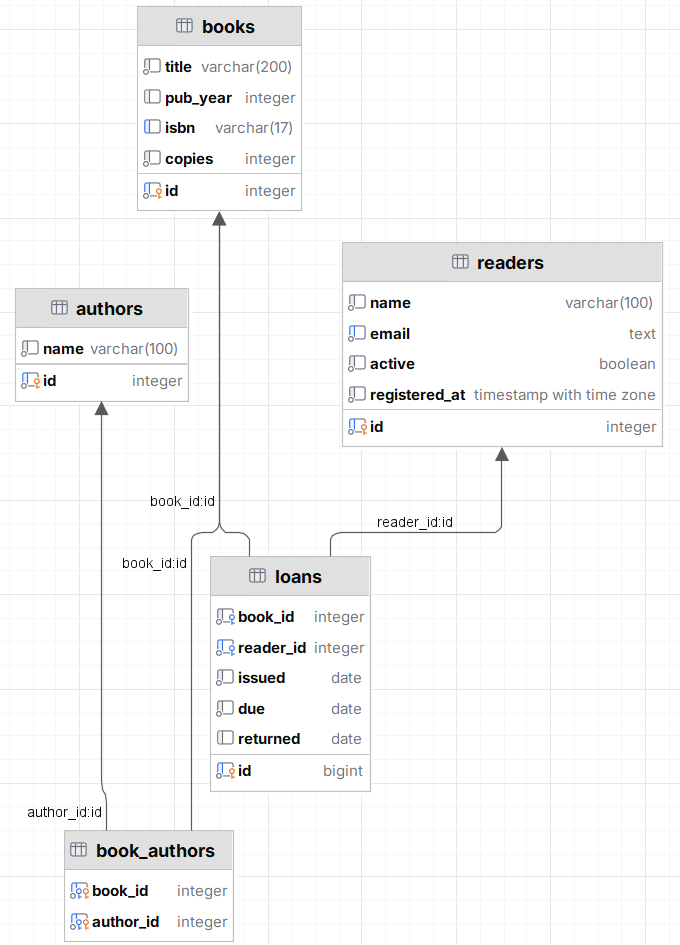
Figure 7.5. A database schema diagram in DataGrip
Modifying and querying data
INSERT, UPDATE, DELETE
The INSERT command adds rows. Identity columns and columns with a DEFAULT value are not specified. The RETURNING clause returns values of the inserted rows, for example the generated id values:
sql
INSERT INTO authors (name)
VALUES ('Brian Kernighan'), ('Dennis Ritchie'),
       ('Martin Fowler'), ('Robert Martin');

INSERT INTO books (title, pub_year, isbn, copies)
VALUES ('The C Programming Language', 1988, '978-0131103627', 2),
       ('Refactoring', 2018, '978-0134757599', 3),
       ('Clean Code', 2008, '978-0132350884', 1),
       ('Clean Architecture', 2017, '978-0134494166', 0),
       ('UML Distilled', 2003, '978-0321193681', 2);

INSERT INTO book_authors (book_id, author_id)
VALUES (1, 1), (1, 2), (2, 3), (3, 4), (4, 4), (5, 3);
sql
INSERT INTO readers (name, email)
VALUES ('Olena Kovalenko', '[email protected]'),
       ('Petro Shevchenko', '[email protected]'),
       ('Iryna Bondar', '[email protected]')
RETURNING id, name;

INSERT INTO loans (book_id, reader_id, issued, due, returned)
VALUES (1, 1, '2026-09-01', '2026-09-15', '2026-09-10'),
       (2, 1, '2026-09-05', '2026-09-19', NULL),
       (3, 2, '2026-09-02', '2026-09-16', NULL),
       (2, 2, '2026-09-10', '2026-09-24', NULL),
       (5, 1, '2026-09-12', '2026-09-26', NULL);
For the command with RETURNING, psql first prints a table with the id and name of the three new readers (1, 2, 3), and then the command name and the number of rows: INSERT 0 3.
The UPDATE command changes columns of the rows that satisfy the WHERE condition, and DELETE deletes rows:
sql
UPDATE books
SET copies = copies + 1
WHERE id = 3;

DELETE FROM readers
WHERE active = false AND id NOT IN (SELECT reader_id FROM loans);
Important
UPDATE and DELETE without WHERE change or delete all rows of the table. Before running such a command, it is useful to run a SELECT with the same condition and make sure that exactly the right rows are selected.
The SELECT query
A SELECT query returns a result table. Its clauses are written in a fixed order (https://www.postgresql.org/docs/current/queries-table-expressions.html):
sql
SELECT title, pub_year               -- which columns
FROM books                           -- from which table
WHERE title ILIKE '%clean%' AND pub_year >= 2010  -- which rows
ORDER BY pub_year DESC               -- order
LIMIT 10 OFFSET 0;                   -- 10 rows, skip 0
SELECT *selects all columns; in programs it is better to list the required columns explicitly. A column alias is set withAS:count(*) AS loans;WHEREconditions are combined with theAND,OR,NOToperators; there are alsoBETWEEN a AND b,IN (1, 2, 3),LIKE(a pattern with%—any characters,_—one character), andILIKE—a PostgreSQL extension that ignores case;ORDER BYsorts in ascending (ASC) or descending (DESC) order;LIMITandOFFSETselect a "page" of the result (pagination).
NULL means "the value is unknown". Any comparison with NULL, even NULL = NULL, gives not true but NULL, so the row does not get into the result. NULL is checked only with the IS NULL and IS NOT NULL operators: the condition returned = NULL finds no rows, while returned IS NULL finds unreturned books.
Aggregate functions and grouping
Aggregate functions calculate one value for a set of rows: count(*)—the number of rows, count(column)—the number of non-NULL values, sum, avg, min, max. The query SELECT count(*), min(pub_year), max(pub_year) FROM books returns 5, 1988, and 2018.
The GROUP BY clause splits rows into groups with the same values, and aggregate functions are calculated for each group. The SELECT list may contain only grouping columns and aggregates. WHERE filters rows before grouping, and HAVING filters groups after it:
sql
SELECT a.name, count(*) AS books
FROM authors AS a
JOIN book_authors AS ba ON ba.author_id = a.id
GROUP BY a.name
HAVING count(*) > 1
ORDER BY a.name;
name | books
---------------+-------
Martin Fowler | 2
Robert Martin | 2
(2 rows)Joining tables
Data split by normalization into several tables is brought together with a join (Fig. 7.6). The join condition is written after ON, and the tables are given short aliases:
INNER JOIN(or justJOIN)—only the pairs of rows for which the condition holds;LEFT JOIN—all rows of the left table; if there is no pair, the columns of the right table containNULL;RIGHT JOIN—the other way around;FULL JOIN—all rows of both tables.
Figure 7.6. Types of table joins: the gray area is the result rows
A list of books with authors joins three tables through the book_authors junction table:
sql
SELECT b.title, a.name AS author, b.pub_year
FROM books AS b
JOIN book_authors AS ba ON ba.book_id = b.id
JOIN authors AS a ON a.id = ba.author_id
ORDER BY b.title, a.name;
title | author | pub_year
----------------------------+-----------------+----------
Clean Architecture | Robert Martin | 2017
Clean Code | Robert Martin | 2008
Refactoring | Martin Fowler | 2018
The C Programming Language | Brian Kernighan | 1988
The C Programming Language | Dennis Ritchie | 1988
UML Distilled | Martin Fowler | 2003
(6 rows)The number of loans of each reader is counted with a LEFT JOIN so that the reader without loans also appears in the report. The count(l.id) function does not count NULL, so it gives 0 for her, and FILTER counts only the rows that satisfy the condition (Fig. 7.7):
sql
SELECT r.name,
       count(l.id) AS loans,
       count(l.id) FILTER (WHERE l.returned IS NULL) AS on_hand
FROM readers AS r
LEFT JOIN loans AS l ON l.reader_id = r.id
GROUP BY r.id, r.name
ORDER BY loans DESC, r.name;
name | loans | on_hand
------------------+-------+---------
Olena Kovalenko | 3 | 2
Petro Shevchenko | 2 | 2
Iryna Bondar | 0 | 0
(3 rows)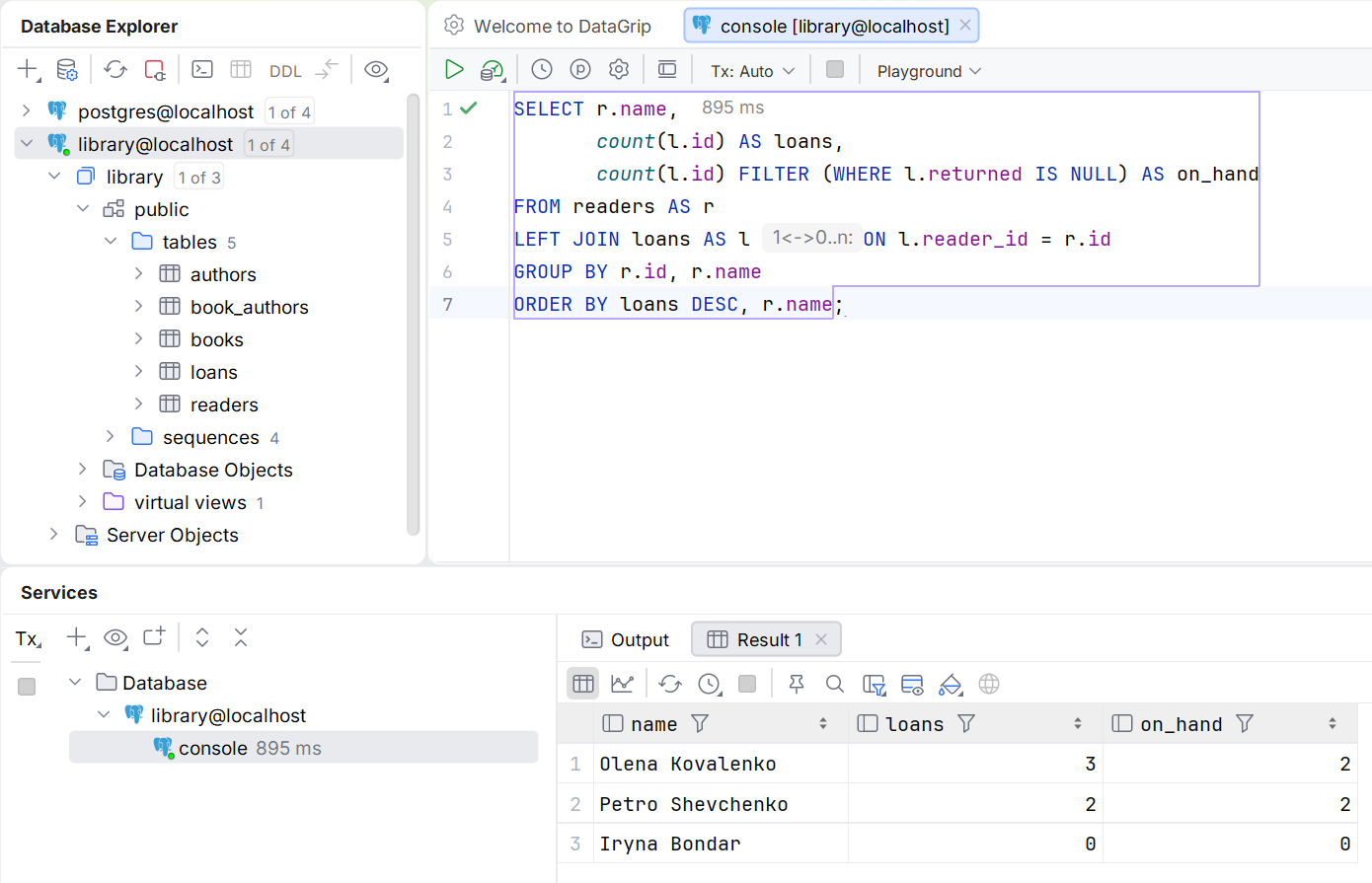
Figure 7.7. Running a query in the DataGrip console
Subqueries
A subquery is a SELECT query in parentheses inside another query. It can return a single value (WHERE copies = (SELECT max(copies) FROM books)) or a set of values for IN and EXISTS. For example, the condition WHERE id NOT IN (SELECT book_id FROM loans) selects books that nobody has borrowed yet (Clean Architecture). Overdue loans as of September 20, 2026 (the difference of two dates is an integer number of days):
sql
SELECT r.name, b.title, l.due,
       DATE '2026-09-20' - l.due AS days_late
FROM loans AS l
JOIN readers AS r ON r.id = l.reader_id
JOIN books AS b ON b.id = l.book_id
WHERE l.returned IS NULL AND l.due < DATE '2026-09-20'
ORDER BY days_late DESC;
name | title | due | days_late
------------------+-------------+------------+-----------
Petro Shevchenko | Clean Code | 2026-09-16 | 4
Olena Kovalenko | Refactoring | 2026-09-19 | 1
(2 rows)Instead of a fixed date, an application uses CURRENT_DATE. The NOT IN condition works correctly only if the subquery does not return NULL (the loans.book_id column has NOT NULL); in other cases NOT EXISTS is more reliable.