
English
Extension methods
Extension methods
An extension method adds a method to an existing type without changing its code or creating a derived class. This way, you can extend even types whose code is not available to you: string, int, DateTime, and interfaces. A classic extension method is a static method of a static non-generic class whose first parameter has the this modifier:
cs
int count = "object-oriented programming".WordCount(); // 2

static class StringExtensions
{
    public static int WordCount(this string text) =>
        text.Split(' ', StringSplitOptions.RemoveEmptyEntries).Length;
}
An extension method is called like an instance method, but the compiler converts the call into a regular static method call (Fig. 12.6). That is why an extension method has no access to the type’s private members and can be called even on null.
Figure 12.6. Calling an extension method
Extension methods are available only when the namespace of their static class is imported with a using directive (or the class is in the same namespace). IntelliSense marks them with a separate icon and the word extension (Fig. 12.7). The LINQ extension methods (Topic 15) become available after using System.Linq, which is imported implicitly in console projects.
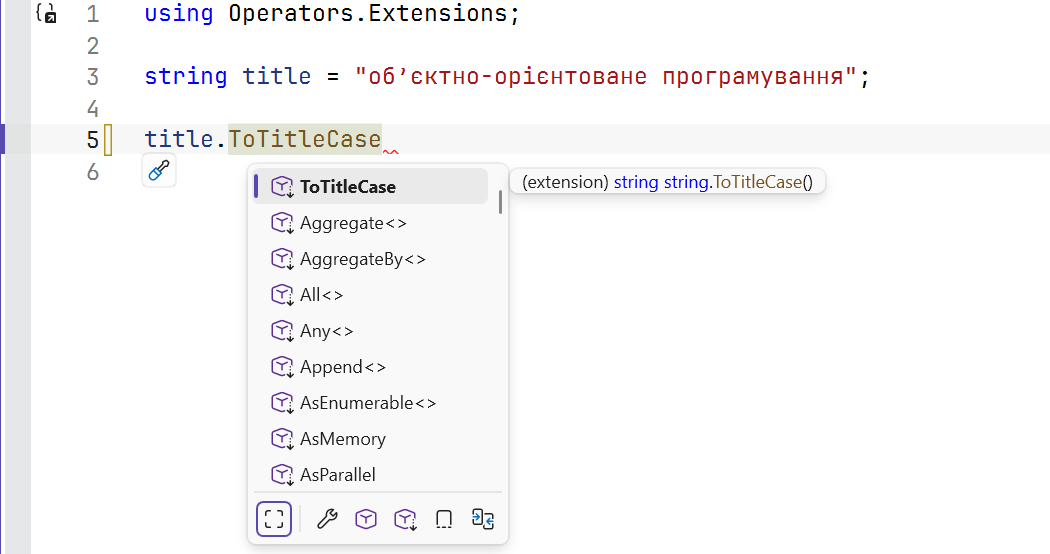
Figure 12.7. An extension method in the IntelliSense list
Resolution rules
- An instance method takes precedence: if a type has its own method with a matching signature, an extension method with the same name is not called (without a warning).
- An extension for an interface is available to all classes that implement it; this is how LINQ is built for
IEnumerable<T>. - If several imported namespaces contain identical extensions, the call is ambiguous (a compilation error); in that case, call the method explicitly:
StringExtensions.WordCount(text).
An extension method is appropriate for helper operations on other people’s types. For your own class, a regular class method is clearer: it is visible in the class code and has access to private members.
extension blocks
C# 14 introduced extension blocks (extension members). An extension(DateTime date) block inside a static class declares the receiver parameter once for all members of the block and lets you declare, in addition to methods, properties, static members, and operators:
cs
bool rest = DateTime.Today.IsWeekend;
DateTime first = DateTime.FirstOfMonth(2026, 9);

static class DateExtensions
{
    extension(DateTime date)           // instance members
    {
        public bool IsWeekend =>
            date.DayOfWeek is DayOfWeek.Saturday or DayOfWeek.Sunday;
    }

    extension(DateTime)                // static members
    {
        public static DateTime FirstOfMonth(int year, int month) =>
            new(year, month, 1);
    }
}
Classic extension methods and extension blocks are compatible with each other: the compiler converts both forms into static methods. The new blocks are useful when you need properties or static members; existing code and documentation most often use classic methods with this.