
English
Abstraction and abstract classes
Abstraction
Abstraction means identifying the essential common features of objects and discarding irrelevant details. In the previous topic, the Shape base class had an Area method that returned 0: the area of a “shape in general” cannot be calculated, and that implementation was artificial. C# lets you express this idea directly: declare what derived classes must be able to do without specifying how. This is what abstract classes and interfaces are for.
Abstract classes
An abstract class is marked with the abstract modifier. It can contain abstract members: methods, properties, and indexers without an implementation, which derived classes must implement (https://learn.microsoft.com/dotnet/csharp/language-reference/keywords/abstract):
cs
abstract class Shape
{
    protected Shape(string name) => Name = name;

    public string Name { get; }
    public abstract double Area();          // no body
    public abstract string Kind { get; }

    public string Describe() => $"{Kind}: {Area():F2}";
}
Properties of an abstract class (Fig. 10.1):
- you cannot create an object of an abstract class:
new Shape("x")causes error CS0144; - an abstract class can have fields, regular methods, and constructors; a constructor is called from a derived class through
base(…), so it is madeprotected; - an abstract member is implicitly virtual, and a non-abstract derived class must override all abstract members (
override); otherwise, error CS0534 occurs; - a variable of an abstract type can refer to an object of any derived class: polymorphism works the same way as with virtual methods.
Figure 10.1. An abstract class and its implementations
Visual Studio creates override stubs for abstract members automatically: place the cursor on the class name with error CS0534 → Ctrl+. → Implement abstract class (Fig. 10.2).
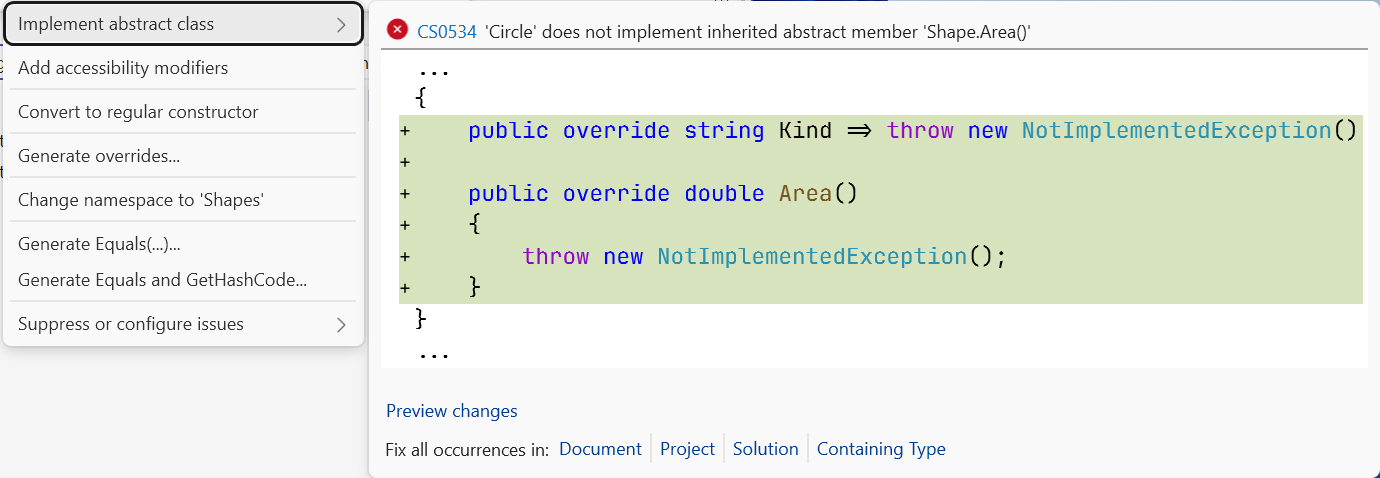
Figure 10.2. Automatically implementing an abstract class
Template method
Abstract classes are often used for the template method design pattern: the base class contains a regular method with the overall algorithm, and individual steps of it are abstract or virtual methods. Derived classes change the steps but not the order in which they run (Fig. 10.3). An example is given in the “Example programs” section.
Figure 10.3. Template method