
English
Execution and aggregation
Deferred and immediate execution
Most operators that return a sequence (Where, Select, OrderBy, Take) use deferred execution: the call only creates a description of the query, and the data is processed when the result is iterated (Fig. 15.4). Such operators are built on iterators (Topic 13). The consequences:
- a query sees changes to the source made after it was created;
- each iteration (
foreach,Count(),string.Join) executes the query again.
Figure 15.4. Deferred execution of a query
Operators that return a single value (Count, Sum, First, Any) and conversion operators (ToList, ToArray, ToDictionary, ToHashSet, ToLookup) execute immediately. To execute a query once and keep the result, call ToList() or ToArray().
In the debugger, the Locals window shows a Results View node for a query variable, with a warning that expanding it iterates the sequence (Fig. 15.5).
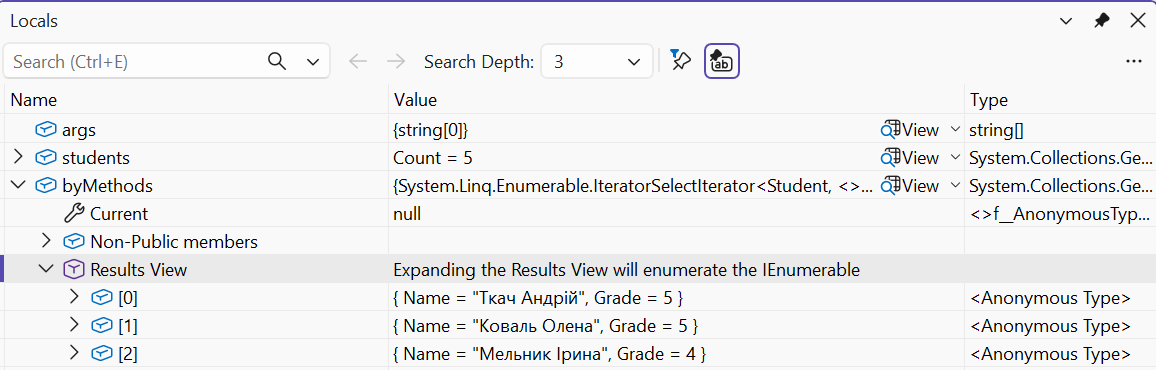
Figure 15.5. A deferred query in the debugger
Elements, quantifiers, and aggregation
The operators that get a single element behave differently when there is no element or there are several (Table 15.1).
Table 15.1. Element operators
| Operator | No elements | Several elements |
|---|---|---|
First | exception | the first |
FirstOrDefault | default or a specified value | the first |
Single | exception | exception |
SingleOrDefault | default or a specified value | exception |
Last, LastOrDefault | like First, FirstOrDefault | the last |
ElementAt(i) | exception | the element at index i |
The exception in the table is InvalidOperationException; for ElementAt, it is ArgumentOutOfRangeException.
The exception messages are “Sequence contains no elements” for an empty sequence and “Sequence contains more than one matching element” for Single with a condition. Choose First when you need any first matching element, and Single when, by its meaning, there must be exactly one element (a search by a unique key) and a duplicate is a data error.
Quantifiers return bool: Any() checks whether there is at least one element (or an element with a condition), All(predicate) checks whether all elements satisfy the condition, and Contains(value) checks whether a value is present.
Aggregate operators calculate a single value: Count, Sum, Average, Min, and Max. MinBy(key) and MaxBy(key) (.NET 6) return the element with the smallest or largest key, not the key value. Aggregate performs arbitrary accumulation:
cs
int[] numbers = [4, 8, 15, 16, 23, 42];

int count = numbers.Count(n => n % 2 == 0);        // 4
double average = numbers.Average();                // 18
int product = numbers.Take(3).Aggregate((a, b) => a * b);   // 480
Student best = students.MaxBy(s => s.Average)!;   // an element
bool hasFailed = students.Any(s => s.Average < 3); // whether anySum, Average, Min, and Max behave differently for an empty sequence: Sum returns 0, while Average, Min, and Max throw InvalidOperationException for value types.