
English
Virtual methods and polymorphism
Virtual methods and overriding
A derived class can change the behavior of an inherited method. To do this, mark the base class method virtual, and in the derived class declare a method with the same signature and the override modifier. Only a virtual, abstract, or already overridden method can be overridden (error CS0506). Inside an override, the base implementation is called through base.Method():
cs
Employee e = new SalariedEmployee("Koval O.", 32_000m);
Console.WriteLine(e.Describe());           // Koval O. (salaried)

class Employee(string name)
{
    public string Name { get; } = name;
    public virtual string Describe() => Name;
}

class SalariedEmployee(string name, decimal salary) : Employee(name)
{
    public decimal Salary { get; } = salary;
    public override string Describe() => $"{base.Describe()} (salaried)";
}
Properties can also be virtual (protected virtual decimal Available => Balance;). Visual Studio generates override stubs: place the cursor in the class → Ctrl+. → Generate overrides… (Fig. 9.3).
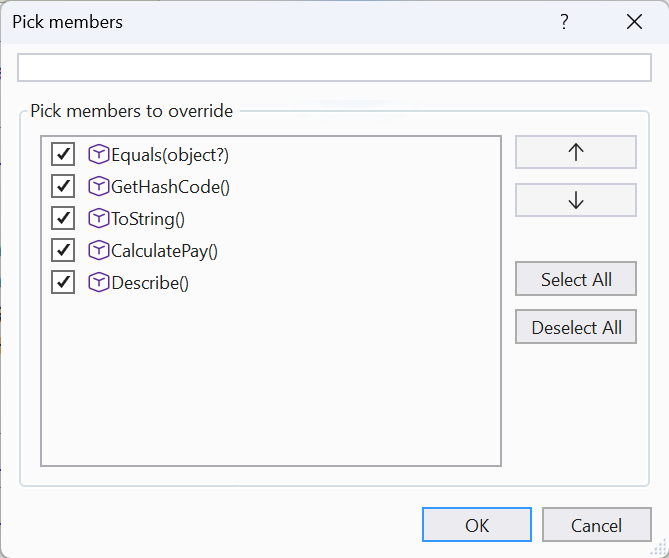
Figure 9.3. Generating method overrides
The Go To Implementation command (Ctrl+F12) lists all overrides of a virtual method (Fig. 9.4).
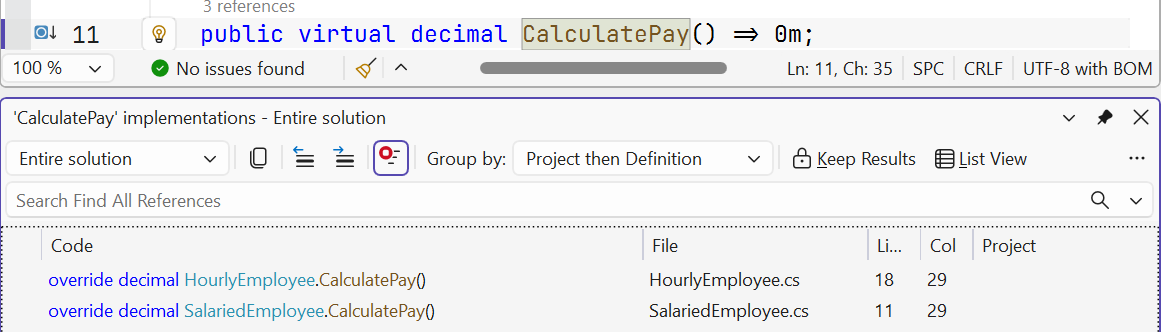
Figure 9.4. Navigating to overrides of a virtual method
Polymorphism
Polymorphism (“many forms”) is the ability of code written for a base type to work in the same way with objects of different derived types, while each object executes its own version of a virtual method (https://learn.microsoft.com/dotnet/csharp/fundamentals/object-oriented/polymorphism):
cs
Employee[] staff = [new SalariedEmployee(…), new HourlyEmployee(…)];
foreach (Employee e in staff)
{
    total += e.CalculatePay();   // each has its own calculation
}
The loop knows nothing about the specific employee types. If you later add a PieceworkEmployee class with piece-rate pay, the loop does not change: it is enough to override CalculatePay in the new class.
The method to be called is determined at run time by the actual type of the object, not by the type of the variable: this is late (dynamic) binding. In simplified terms, every object refers to the virtual method table of its class, which records, for each virtual method, the implementation that must be called (Fig. 9.5). For non-virtual methods, the call is determined at compile time by the variable’s type.
Figure 9.5. Calling a virtual method through a base type reference
The debugger shows both types: in the Locals window, the variable e has the type Employee {HourlyEmployee}: first the variable’s type, then the actual type of the object in braces (Fig. 9.6).
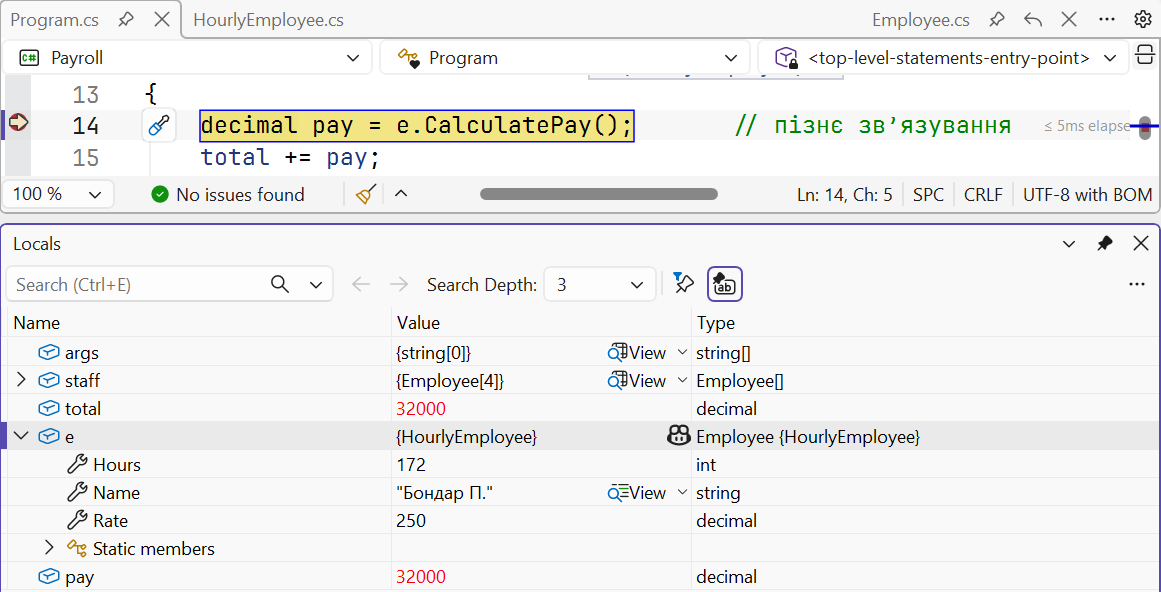
Figure 9.6. The variable type and the actual object type in the Locals window
Hiding members with new
If a derived class declares a method with the same signature as in the base class without override, the new method hides the base one. The compiler warns about this: CS0108 for a non-virtual method and CS0114 for a virtual one (Fig. 9.8). The new modifier removes the warning and shows that hiding is intentional. Unlike overriding, a hidden method is selected by the type of the variable (Fig. 9.7):
Figure 9.7. Hiding with new and overriding with override
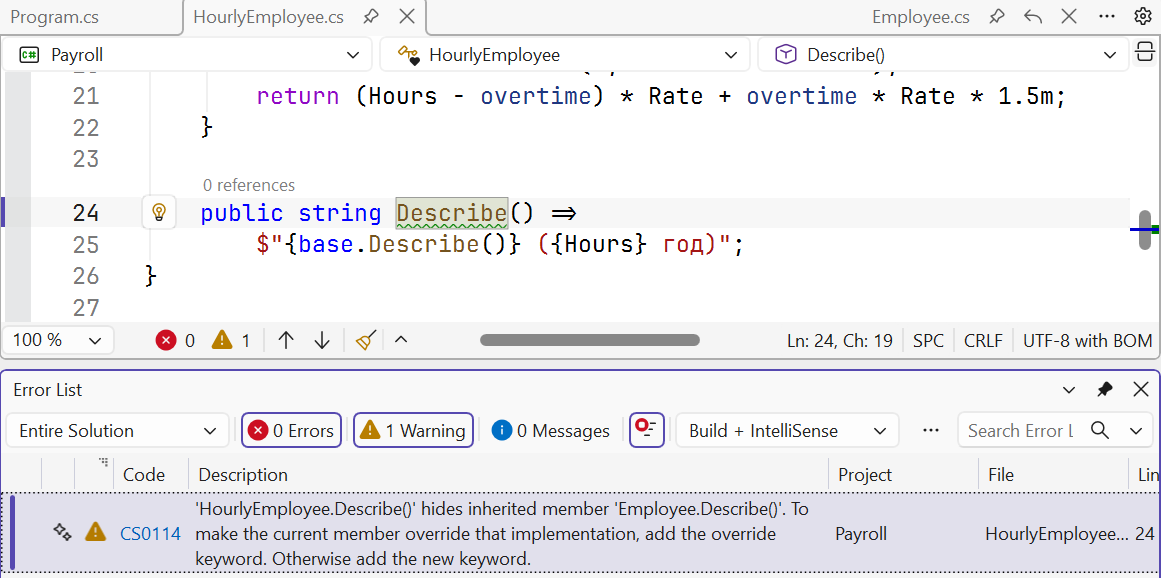
Figure 9.8. Warning about hiding an inherited member
Hiding is almost never needed in new code: it makes behavior depend on the variable’s type, which is confusing. It occurs mostly when a member with the same name appears in a base class from a third-party library. For more on the difference, see https://learn.microsoft.com/dotnet/csharp/programming-guide/classes-and-structs/knowing-when-to-use-override-and-new-keywords.
The object class
The System.Object class contains methods that all objects have (https://learn.microsoft.com/dotnet/api/system.object):
ToString()returns a text representation; by default, the type name;Equals(object? obj)checks equality; by default, for classes, it compares references;GetHashCode()returns a hash code for hash tables (dictionaries, sets; Topic 13);GetType()returns aTypeobject with information about the actual type (a non-virtual method).
The first three methods are virtual and are often overridden. If objects of a class should be considered equal by value (two books with the same ISBN), override Equals and GetHashCode together:
Equalsmust be reflexive (a.Equals(a)), symmetric (a.Equals(b) == b.Equals(a)), and transitive; it returnsfalsefornulland for objects of another type;- equal objects must have the same hash code; it is convenient to calculate it with the
HashCode.Combinemethod from the same fields that participate inEquals; - fields that determine equality should preferably be immutable.
For classes, the == operator still compares references unless it is overloaded (Topic 12). Records (record, Topic 11) generate value-based Equals, GetHashCode, and == automatically.