
English
Interfaces
Interfaces
An interface is a contract: a set of members that a type implementing it undertakes to provide (https://learn.microsoft.com/dotnet/csharp/fundamentals/types/interfaces). By convention, interface names start with the letter I: ISwitchable, IComparable<T>. An interface declares methods, properties, indexers, and events, but (except for default members) contains no implementations, instance fields, or constructors:
cs
interface ISwitchable
{
    bool IsOn { get; }
    void TurnOn();
    void TurnOff();
}

class Kettle : ISwitchable
{
    public bool IsOn { get; private set; }
    public void TurnOn() => IsOn = true;
    public void TurnOff() => IsOn = false;
}
Interface members are public by default, so their implementations in a class must also be public (error CS0737). If a class does not implement a member, the compiler reports error CS0535. Visual Studio offers stubs: Ctrl+. → Implement interface (Fig. 10.4).
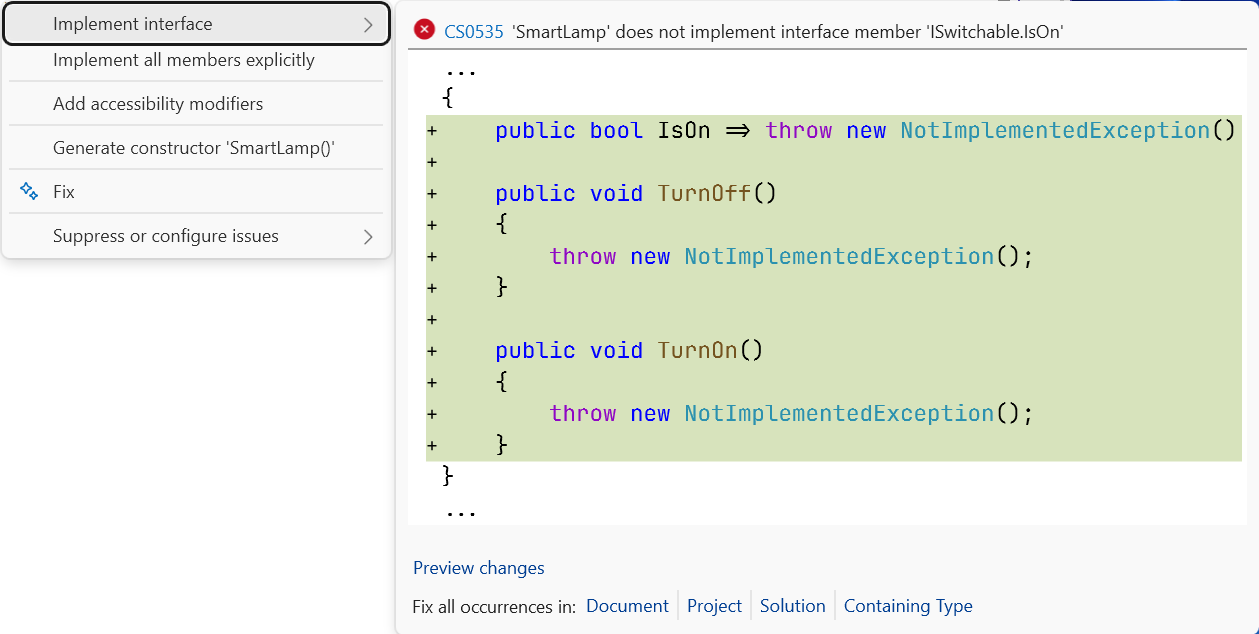
Figure 10.4. Automatically implementing an interface
Multiple interfaces
A class can have only one base class but can implement any number of interfaces: class SmartLamp : Device, ISwitchable, IDimmable, IDisposable (the base class is written first). A variable of an interface type can refer to any object that implements the interface, and the is operator with a pattern checks whether an object supports another interface: if (device is IDimmable d). This connects classes that have no common base class: a kettle and a lamp are not “the same kind” of device, but both can be switched on (Fig. 10.5).
Figure 10.5. A class that implements several interfaces
In a UML diagram, interface implementation is shown as a dashed line with a hollow triangle or with the shorthand “lollipop.” Visual Studio can build such diagrams from code with the optional Class Designer component, which is installed through the Visual Studio Installer.
You can extract an interface from an existing class: place the cursor on the class name → Ctrl+. → Extract interface… (Fig. 10.6).
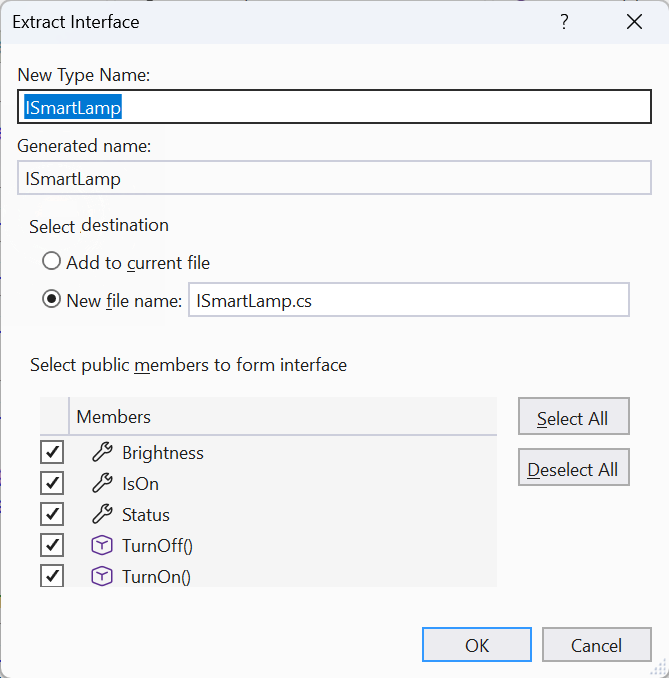
Figure 10.6. Extracting an interface from a class
Explicit interface implementation
If two interfaces have members with the same signature but different meanings, or a member should not be part of the class’s public interface, use an explicit implementation: specify the interface in the member name and omit the access modifier (https://learn.microsoft.com/dotnet/csharp/programming-guide/interfaces/explicit-interface-implementation):
cs
void IPrintable.Print() { /* print on a printer */ }
void ILoggable.Print() { /* write to the log */ }
An explicitly implemented member is accessible only through a variable of the interface type: ((IPrintable)report).Print(). An example is given in the lab assignment.
Default members and static abstract members
Starting with C# 8, an interface can contain a default implementation: a class that implements the interface receives it automatically but can provide its own. This lets you add a new member to a widely used interface without breaking existing classes:
cs
interface ISwitchable
{
    bool IsOn { get; }
    string Status => IsOn ? "on" : "off";   // default
}
A default member is called only through an interface variable. Interfaces can also declare static abstract members (C# 11): a type undertakes to provide a static method, property, or operator. .NET generic math is built on this: the INumber<T> interface requires numeric types to provide the + and * operators and the Zero and One properties, so you can write a single sum method for int, double, and decimal. Generics are covered in Topic 13.