
English
Copy and move
Copying a value and copying an address
By default, copying an object with an int* data member copies the address. It does not create a second array. If both objects consider themselves owners, destroying the first one frees the shared buffer, and the second is left with a dangling address. Freeing it again has undefined behavior. This is a problem of the ownership contract, not just of the delete syntax.
A deep copy creates an independent resource and transfers the values of the elements. A shallow copy transfers only the data members, which may include an address. It is perfectly correct for a non-owning observer if the external resource lives long enough. That is why the presence of a pointer by itself does not mean it must be deleted.
The copy constructor creates a new object from an existing one: T b{a}. Copy assignment changes an already existing object: b = a. The second case must correctly handle the resource that b already had, as well as self-assignment a = a. These are different stages of the lifetime, so one correct implementation does not automatically make the other correct.
For a training string, we represent the empty state as a pair of zero size and a null address. The text() member function returns a standard string, so the user does not get access to the owned buffer. Production code usually uses std::string right away; the manual implementation is needed here to see the responsibilities of a resource owner.
The structure is shown in Fig. 8.1.
Figure 8.1. An address copy and an independent copy of a buffer
Example 1. A custom string
Problem. Implement an independent copy, copy-and-swap, and buffer transfer; an empty source remains usable.
cpp
#include <algorithm>
#include <cassert>
#include <print>
#include <string>
#include <string_view>
#include <utility>

class MyString {
    std::size_t size_ = 0;
    char* data_ = nullptr;
public:
    explicit MyString(std::string_view s = {}) : size_(s.size()),
        data_(size_ ? new char[size_] : nullptr) {
        if (size_) std::copy_n(s.data(), size_, data_);
    }

    ~MyString() { delete[] data_; }
    MyString(const MyString& x) : MyString(x.text()) {}
    MyString(MyString&& x) noexcept
        : size_(std::exchange(x.size_, 0)),
          data_(std::exchange(x.data_, nullptr)) {}
    void swap(MyString& x) noexcept {
        std::swap(size_, x.size_);
        std::swap(data_, x.data_);
    }

    MyString& operator=(const MyString& x) {
        MyString temp{x};
        swap(temp);
        return *this;
    }

    MyString& operator=(MyString&& x) noexcept {
        if (this != &x) {
            delete[] data_;
            data_ = std::exchange(x.data_, nullptr);
            size_ = std::exchange(x.size_, 0);
        }
        return *this;
    }

    std::string text() const {
        return size_ ? std::string(data_, size_) : std::string{};
    }
};

int main() {
    MyString a{"alpha"};
    MyString b{a};
    a = MyString{"beta"};
    assert(b.text() == "alpha");
    b = b;
    MyString c{std::move(b)};
    assert(b.text().empty());
    b = c;
    c = std::move(c);
    assert(c.text() == "alpha" && b.text() == "alpha");
    MyString empty;
    empty = std::move(b);
    assert(b.text().empty());
    std::println("{} {}", a.text(), empty.text());
}
Copying creates new storage. Moving transfers the address and nulls out the source. Self-move here deliberately keeps the value; this is an explicit contract of this class.
Output:
text
beta alpha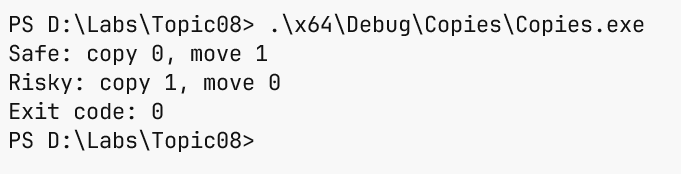
Figure 8.2. Copies and moves during reserve
Move and noexcept
A move lets you transfer a resource when the previous value of the source is no longer needed. std::move by itself transfers nothing: it changes the category of the expression and allows an overload with T&& to be selected. The resource is transferred by the move constructor or the move assignment operator.
For our own buffer, we agree that the source is empty after a move. For many standard types, the guarantee is weaker: the state is valid, but its specific value is unspecified unless the documentation promises otherwise. You can destroy the object or assign a new value to it; perform operations with additional preconditions carefully.
noexcept states that an operation will not let an exception escape. If it happens anyway, the program terminates via std::terminate. For simply transferring a pointer and a size, such a promise is natural; for an operation that allocates memory or calls an unknown function, you must not add it just for the sake of performance.
During reallocation, vector tries to preserve its guarantees in case of an error. If a move can throw and copying is available, the implementation may copy the old elements. The example compares two types with identical counters but different move specifications. We deliberately call reserve(capacity()+1) to guarantee that a new buffer is required.
The structure is shown in Fig. 8.3.
Figure 8.3. Expression categories with a shared xvalue
Example 2. A move tracer
Problem. Compare the transfer of a single vector element for a non-throwing and a potentially throwing move.
cpp
#include <cassert>
#include <print>
#include <vector>

struct Safe {
    inline static int copies = 0, moves = 0;
    Safe() = default;
    Safe(const Safe&) { ++copies; }
    Safe(Safe&&) noexcept { ++moves; }
};

struct Risky {
    inline static int copies = 0, moves = 0;
    Risky() = default;
    Risky(const Risky&) { ++copies; }
    Risky(Risky&&) noexcept(false) { ++moves; }
};

int main() {
    std::vector<Safe> a(1);
    a.reserve(a.capacity() + 1);
    std::vector<Risky> b(1);
    b.reserve(b.capacity() + 1);
    assert(Safe::moves == 1 && Safe::copies == 0);
    assert(Risky::copies == 1 && Risky::moves == 0);
    std::println("Safe: copy {}, move {}",
        Safe::copies, Safe::moves);
    std::println("Risky: copy {}, move {}",
        Risky::copies, Risky::moves);
}
Creating the initial elements does not copy them. After the forced reserve, the counters show the reallocation choice on the tested implementation. The Risky type does not actually throw, but its signature allows it.
Output:
text
Safe: copy 0, move 1
Risky: copy 1, move 0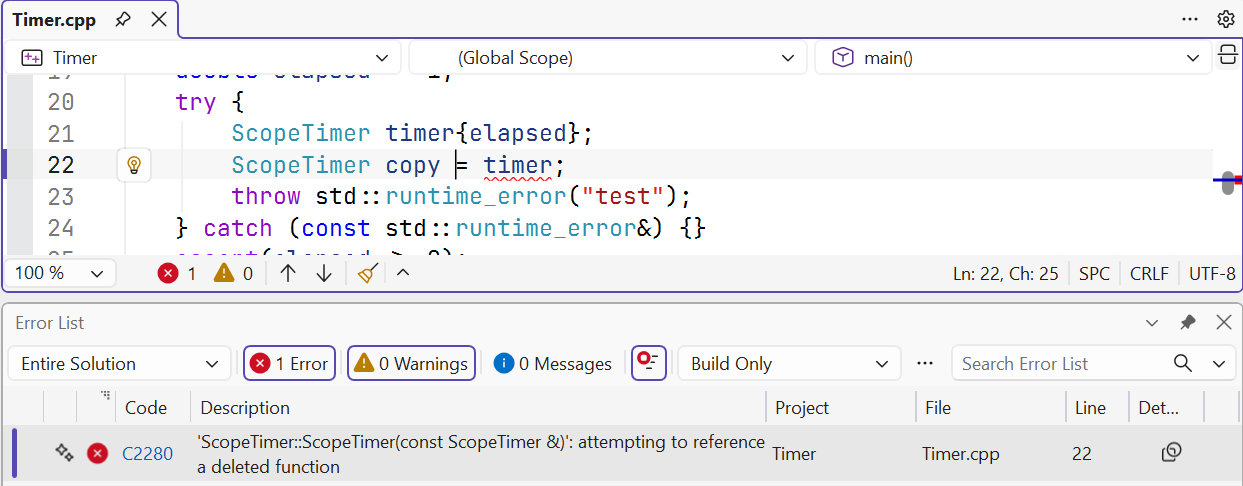
Figure 8.4. Forbidden copying of a guard